
Trends

GEN ALPHA: Who Are They? How Are They Different? Why It Matters for Researchers!

As the world’s largest population, Gen Alpha currently represents almost 25 percent of the total population. This generation is turning 16 this year and represents current toddlers to teens. Pam illustrates this nimble generation who do not like being called “digital natives” because they’re adept at living life in the real and digital worlds seamlessly. They play soccer outside with friends and play Minecraft indoors with those same friends. Wellness for them is an active pursuit that varies from skincare and cosmetics to fitness and health. This is a group that spends their time connecting with family and friends in both worlds. Read on as researchers gain insight into how to design a research study with Gen Alpha. […]


Trends

Good Work Matters

Drawing on qualitative interviews with 25 insights professionals across agencies and client organizations, Marco Rovagnati explores what good work looks like in the age of AI. He introduces a clear framework for “intentional cognition,” outlining how thinking can be deliberately distributed between humans and AI without compromising rigor or judgment. Readers will gain practical guidance on where AI adds value in the research process—and where human interpretation, synthesis, and accountability must remain central. Marco also highlights emerging practices that protect deep thinking, strengthen ownership, and prevent the erosion of insight quality in AI-supported workflows. […]

Schools of Thought

How AI-Driven Emotion Metrics Uncover Hidden Truths in Qualitative Research

Authors Moses and Hartzbech delve into a Superbowl advertising case study to explore how AI tools such as voice analysis and facial expression analysis offer a new frontier by capturing deeper, often unspoken emotional responses and turn them into measurable insights. By combining traditional conversations with these “semi-quantitative” data layers, researchers can uncover more compelling patterns of consumer sentiment, revealing truths that sometimes go beyond and sometimes contradict what participants say, ultimately delivering richer insights. […]

Luminaries

Listening Deeper: Mental Models, Interior Cognition, and Why Qualitative IS Science with INDI YOUNG

Qualitative researcher and author Indi Young has spent decades developing a methodology that goes beyond opinions and behaviors to uncover what she calls interior cognition—the inner thinking, emotional reactions, and personal rules that actually drive human decision-making. In this interview, Young explains how her Mental Model diagrams help organizations recognize the full range of human thinking styles and design for all of them, not just the majority. She shares concrete examples from studies on clothing care and home cooking that reveal how surface-level research leads organizations to build the wrong things—and how listening at greater depth changes not just the research, but the decisions that follow. […]

Global

“Turn Left at The Big Mango Tree” – Why We Need to Take Research Out of the Big Cities

This article offers a fresh perspective on global market research beyond major metropolitan markets—the comfort trap of capital cities—highlighting the untapped value of rural and secondary city insights in Southeast Asia. Drawing on practitioner experiences, it reveals how urban bias can limit understanding of real consumer behavior, especially in culturally diverse and fast-changing regions. It also underscores the strategic importance of inclusive research design and adapting methodologies to local contexts. Overall, it equips researchers and marketers with a compelling case—and actionable ideas—for expanding their geographic lens. […]

Trends

AI Imagery: Generate Engagement—Not Distrust

Generative AI is transforming how brand imagery is created, but not without consequences. In this article, Chris Arning examines how AI-generated imagery is reshaping consumer trust, drawing on semiotics, industry examples, and conversations with qualitative researchers. Rather than treating AI as inherently damaging, the piece argues that transparency, intent, and creative craft are the real drivers of trust. Readers will learn how consumers are beginning to question not just what images show, but how they are produced, and what this shift means for brand distinctiveness, authenticity, and qualitative interpretation in an increasingly synthetic visual landscape. […]

Quant Lens

After Qualitative Research: Predicting Market Success

Sales forecasting can seem outside the qualitative researcher’s comfort zone, yet the behavioral questions that drive a forecast—why people buy, repeat, and stay loyal—are exactly the territory qualitative researchers explore every day. In this Quant Lens article, Robert Walker walks through the full forecasting sequence. A hypothetical Acme Fruit Juice example makes the math concrete, and guidance on scenario planning and sensitivity analysis shows how to use forecasts credibly in practice. This step-by-step guide shows how concept appeal, awareness, distribution, trial, and repeat purchase combine into a Year 1 forecast. […]

Book Reviews

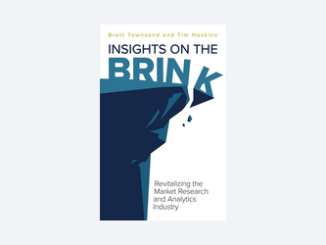
Insights on the Brink: Revitalizing the Market Research and Analytics Industry

Paula Rosecky reviews how Insights on the Brink: Revitalizing the Market Research and Analytics Industry challenges the consumer insights profession to evolve from data collection to strategic business partnership. Drawing on personal experience working with co-author Brett Townsend, Paula reflects on the enduring value of consumer empathy, storytelling, curiosity, and business acumen. Readers will gain practical insights into how research professionals can create greater business impact by focusing on decisions, outcomes, and meaningful human understanding. […]

Business Matters

Rethinking Client Deliverables: What Happens after the Research Ends?

Your engagement doesn’t have to end after your marketing research report is delivered. The insights you uncover can serve as a springboard for expanded services—creating customer personas, developing key message platforms, or assembling brand guidelines. By applying research insights, you deepen client relationships and elevate your role from researcher to strategic partner. Thoughtfully extending your deliverables can also potentially create new revenue opportunities while reinforcing your core expertise. […]

Toolbox

Cognitive Interviewing 101: Adding a Crucial Blade to Your Qualitative “Swiss Army Knife”

In an era where AI can analyze thousands of interviews in seconds, cognitive interviewing stands out as the irreplaceable human skill that transforms research design. This powerful technique—borrowed from survey methodology—helps qualitative researchers uncover hidden problems in questions, recruitment screeners, materials, and user experiences before costly mistakes happen. Through real case studies learn how to add this AI-resistant methodology to your research toolkit. Create a service that your clients don’t even know to ask for. […]