

By Karen Seratti
Founder and Chief Listening Officer
Seratti Group
San Francisco, California
karen@serattigroup.com
 By Traci Ayer
Founder and Chief Strategist
Seratti Group
Denver, Colorado
traci@serattigroup.com
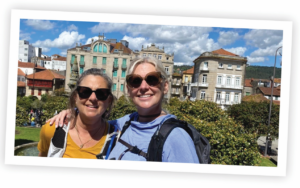 Having celebrated big birthdays last year, we decided it was time for some reflection and rejuvenation: a reset if you will. That’s when the Camino de Santiago in Spain hit the proverbial radar screen.
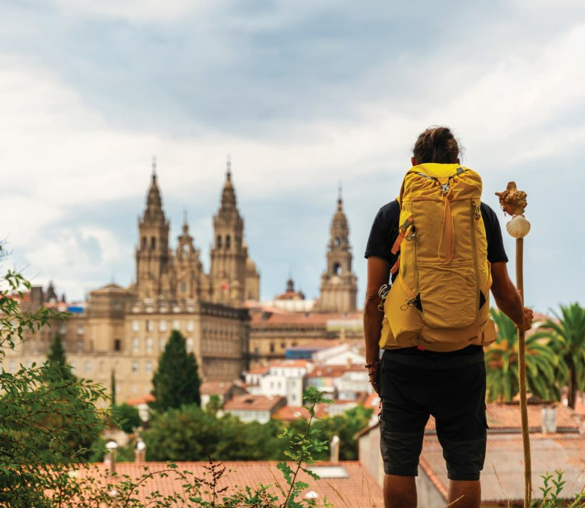
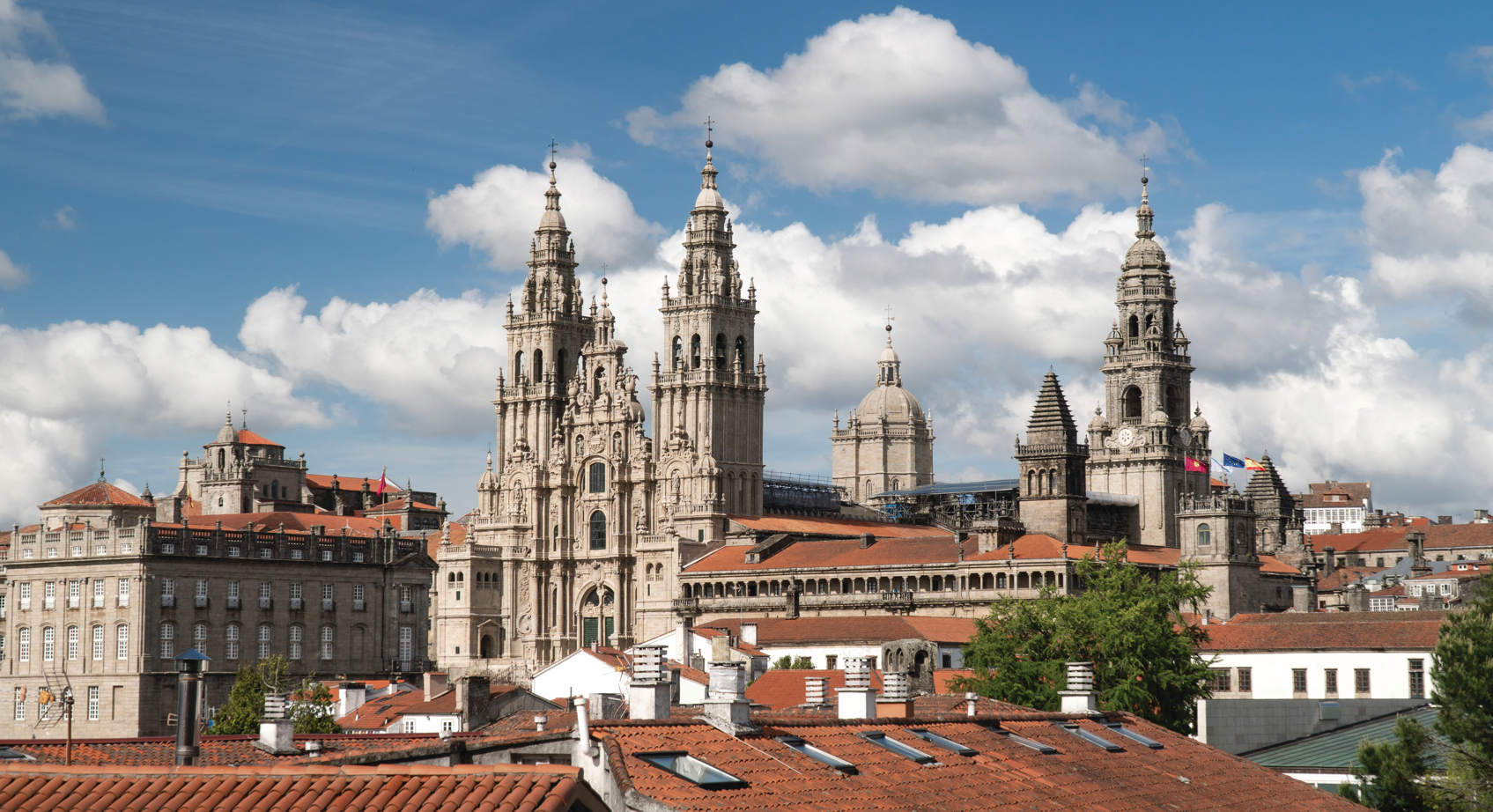
The historic Camino de Santiago, or as it translates in English, the Way of Saint James, is in total an 800 km walk that can take around five weeks to complete. The Camino, as it is known colloquially, is a network of ancient pilgrimage routes that converge on the Cathedral of Santiago de Compostela, where James the Great, one of the Twelve Apostles rests.
This long-distance trek is often a spiritual journey that draws people from all walks of life. Like us, many complete segments of this historic way en route to the Cathedral of Santiago de Compostela.
As qualitative researchers know, old habits are hard to break. What an opportunity for a scientist and a strategist to put one foot in front of the other, clear our heads, and simply focus on the journey. Follow us through our learnings from walking 85 miles during a week in Spain.
 First, Some History of a Pilgrimage and the Camino
The practice of pilgrimage, a pilgrim’s journey by literal definition, predates recorded history. Noga Collins-Kreiner, a professor in geography and environmental studies at the University of Haifa, wrote “Pilgrimage is one of the oldest and most basic forms of population mobility known to human society.”1
A pilgrimage is also a journey and is often one that takes us to holy places for personal transformation. It is a temporary step away and a chance to reflect and rejoice socially or spiritually.
Connecting with others for a shared purpose bonds those on the journey, no matter the personal motivations that brought each individual to the pilgrimage. When the journey and transformation are complete, the pilgrim returns home to daily life. The significance of the journey is highly individualized to each pilgrim. Travelers may be seeking spiritual enlightenment, cultural understanding, connection to history or community, and/or simply for leisure and physical fitness.
Specifically, the origins of the Camino de Santiago pilgrimage date back to the early 9th century. At that time, the remains of the Apostle St. James the Great, the patron saint of Spain, were believed to have been discovered in the Cathedral of Santiago
de Compostela.2
Today, the Camino’s popularity has exploded—the number of pilgrims reached 446,076 in 2023 according to Britannica.3 The pilgrimage comprises multiple “ways” or routes of varying length and difficulty. The most popular, the Camino Francés, begins in southern France and covers about 500 miles. Other routes include Camino del Norte, Camino Portugués, and Camino Inglés, to name a few.
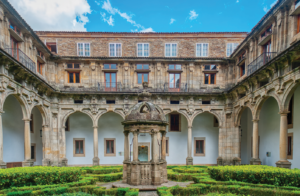
Setting off on a Pilgrimage
Fascinated by this history and a desire to take in history and culture across time and space, the objective of our pilgrimage was to spend a week walking in Spain to commemorate our milestone birthdays—and to find balance by unplugging from the daily grind and reconnect. We also sought to situate our foundational qualitative research skills in our pilgrimage by connecting our observations, learnings, and insights from the Camino to our personal and professional lives back home.
Given family and work obligations, we decided that an itinerary that we could complete in about a week was reasonable. We focused on early May to avoid the summer crowds and the hot weather. With these general parameters, we enlisted the help of a self-guided tour company for support in securing hotel accommodations and transporting our luggage from town to town each night.
We decided to take the recommended Camino Portugués: Final Stage – Tui to Santiago. This route covers about 85 miles up the far western coast of Spain. Beginning just north of the Portuguese border, we spent six days walking with a one-day break in the middle of the week. Once our group of 17 women met in Tui, we set off and embarked on our pilgrimage adventure.
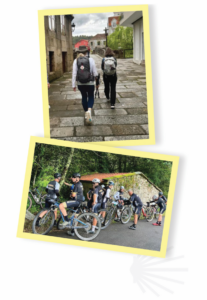 When Embarking on Your Pilgrimage
The qualitative researchers in us reflected on our pilgrimage to offer some practical insights for a successful pilgrimage. First things first: Travel light. Bring only what you can carry and just leave everything else behind. Several of us learned on day one, extra baggage slows you down, so focus on just the essentials. Carry water, sun protection, and enough sustenance in your daypacks. Too much stuff and non-basic necessities will hinder your ability to make forward progress. Once we shed all the superfluous, we felt lighter, more agile, and less anxious. So, focus on the social components and not material goods. Plus, we didn’t miss the extra stuff at all!
The trek has narrow pathways, so when the path is narrow, slow-moving people may find it scary with the faster movers. One day, a bicycle race was taking place. Of course, this happened on a tight, wooded, steep stretch of our walking path. Bikers were whizzing by at warp speed while we focused on avoiding tripping on tree roots. While this can be disconcerting, we kept our steady focus on finding the right footing and getting over the next hill. After all, the tortoise was victorious in the end!
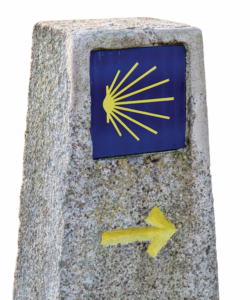
Always trust the arrows. All along the route, there are bright yellow arrows marking the way on the Camino. There were several times when we would approach an arrow and think: “This can’t be right.” It seemed to zigzag when we really wanted to find the most straightforward route. But as qualitative researchers know, sometimes the long way around leads us to those deeper connections. Trusting the process, without being able to see a full map, takes discipline. By not skipping ahead, we encountered beautiful scenery, unexpected characters, and delightful stories. Following those arrows always served us well!
 Everyone Is on Their Own Camino
We had 17 women in our group, and everyone showed up for a different reason. Some were grieving a loss; some were celebrating a milestone. Some were seeking a spiritual experience; others just wanted to see if they could do it. As qualitative researchers, we were focused on self-reflection. Not only did we all arrive with our own intentions, but we all kept going based on very different motivators. On the Camino, as in life, the journey is unpredictable. While there is magic in the shared experience, the personal experience is also beautifully unique to each individual.
Embarking on this pilgrimage led to several personal and professional opportunities. One important reflection is listening leads to learning. By actively listening to our fellow pilgrims—or customers—we can capture rich, contextualized information about human experiences. This helps us better understand the motivations and impulses driving behaviors. Invest the time and resources to listen.
There is also power in live connection. Seeing people’s faces and hearing their stories in person creates dynamism and long-lasting impact. When possible, utilize in-person methodologies. We also would like to note that preparation reduces uncertainty. When embarking on something new—a long walk or a new product launch—there is always a requisite leap of faith. So, asking questions ahead of time lowers risk. Employ research as a valuable risk management tool.
Importantly, a café con leche can be surprisingly refreshing on a long walk. A little caffeine goes a long way. To keep your feet comfortable, some Vaseline between your toes is very effective for blister prevention. Also, make sure to enjoy the local food, and taking a day off for wine tasting is always a good idea!
 On the trail, we say “Buen Camino” to our fellow walkers. It translates to “Good Way,” and it is an acknowledgement of the shared experience. As we continue to reflect on our pilgrimage, we hope to cross paths with you soon.
We wish everyone well on their own journey: Buen Camino.
REFERENCES
- Collins-Kreiner, N. (2010). Researching pilgrimage: Continuity and transformations. Annals of tourism research, 37(2), 440–456. https://doi.org/10.1016/j.annals.2009.10.016
- Read more about “What is the Camino de Santiago?,” https://caminoways.com/camino-de-santiago
- Ostberg, R. Camino de Santiago: Christian pilgrimage. Available at: www.britannica.com/event/Camino-de-Santiago