

Martin Raymond is a Co-founder of The Future Laboratory, journalist and considered one of the world’s leading futurists. In this Luminaries podcast interview Kay Corry Aubrey spoke with Raymond about the critical role of the human researcher in foresight research as we enter an age dominated by artificial intelligence. The Future Laboratory’s work is truly human centered. Raymond describes how his team identifies trends by finding and connecting with people who are the true innovators in a field, and how they use qualitative research, scenario planning, and storytelling to build frameworks to flesh out future trends

Podcasts
The Case for Qualitative Research Education
An Interview with Rick Weitzer In addition to his position as managing partner of the Prell Organization, he is adjunct assistant professor at the […]

Book Reviews
Soulbbatical: A Corporate Rebel’s Guide to Finding Your Best Life by Shelley Paxton
Book Reviewer Susan Stanicek says that Shelley Paxton’s memoir, Soulbbatical: A Corporate Rebel’s Guide to Finding Your Best Life, gives readers a front-row seat to the struggles and pain she went through in hopes to inspire others. […]
Book Reviews
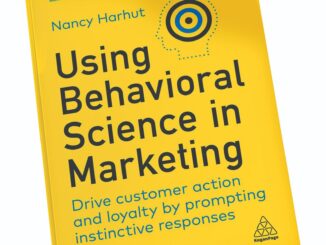
Using Behavioral Science in Marketing: Drive Customer Action and Loyalty by Prompting Instinctive Responses
Review of the book Using Behavioral Science in Marketing: Drive customer action and loyalty by prompting instinctive responses, by Nancy Harhut, Kogan Page, 2022 […]
Be the first to comment