

By Carly Fink
President
Provoke Insights
Ridgewood, New Jersey
carly.fink@provokeinsights.com
My Clean Eating Aspirations Meet Reality
I am a working mother of two elementary-age children, and like many parents today, I care deeply about what my children eat. Over the past few years, we have become increasingly aware of the impact of dyes, chemicals, and excessive sugar on growth, fertility, disease risk, and mental health.
But I rarely have the luxury of researching every ingredient in my children’s diets. Between work, after-school activities, and homework battles, just packing their lunches each morning feels like a small victory.
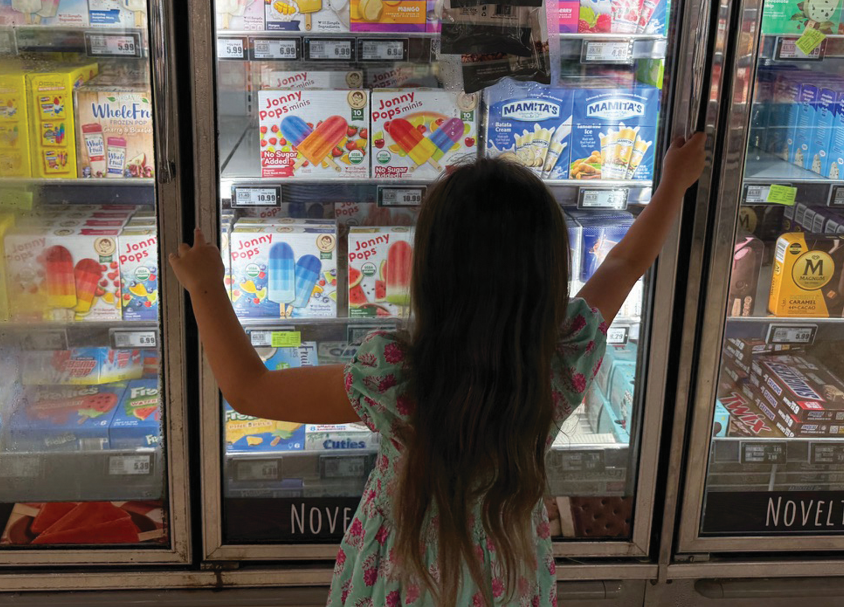
At the grocery store, my family’s dietary decisions are further complicated. The more colorful and sugary a product is, the more my children crave it. So, I’m constantly balancing their excitement for treats with my need to choose healthier options, free from additives and chemicals. As a result, grocery trips with my kids, who are drawn to the colorful and sugary foods, can include some pleading, minor arguments, or even a few tears.
The Critical Questions Raised by This Contradiction
This daily push-and-pull in my household mirrors exactly what millions of families experience. It raises urgent questions for the entire grocery industry.
- How should brands respond when families say they want cleaner, healthier food but instinctively reach for products packed with sugar, bright dyes, and playful packaging?
- Should companies invest in reformulating products to remove artificial ingredients or prioritize clearer claims and transparent labeling so shoppers trust what they see?
- Even when a brand makes a cleaner promise, do families believe it, or does skepticism about greenwashing overshadow honest effort?
- How must grocery brands evolve their consumer personas to reflect the rising influence of clean eating and sustainability on shopper behavior?

These questions are so important, they have motivated me to develop my expertise in conducting quantitative and qualitative research studies for clients within the grocery industry.
In this article, I share how the shift toward clean eating and sustainability is transforming grocery decision-making and creating new opportunities for qualitative researchers to add value. I will break down the trends driving this change, explain which quantitative and qualitative methods uncover the real story behind shopper behavior, and provide practical guidance on how researchers and brands can navigate this evolving landscape with confidence and credibility.
The Origins of Today’s Contradiction: When Bright Colors Ruled
Twenty years ago, working as an intern in a market research firm, I remember my colleagues and I testing new potential drinks using conjoint analysis. We learned that the brighter and bolder the color, the more likely it was to rise to the top as a new consumer favorite. Ironically, food brands thrived by emphasizing the very qualities I now try to limit in my own children’s snacks.
One of the most exciting parts of the job was working in the qualitative food tasting facilities. New and unusual flavors were constantly tested, ranging from a new type of whipped cream to cookies with unexpected combinations of ingredients. I enjoyed working with clients to create the most unusual foods and designs that would stand out.
Today, the landscape has shifted toward a health-conscious consumer who’s craving better-for-you options yet are often overwhelmed by conflicting claims and confusing labels.
As a result, consumer packaged goods (CPG) and food companies have shifted their focus. For example, they are testing simple, familiar ingredients and developing treats for children that do not contain corn syrup. They are evaluating reactions to everyday household items, such as garbage bags or laundry detergents that use fewer chemicals.
Many companies are weighing whether these investments truly pay off. Some brands have a genuine commitment to better ingredients and transparent practices. Other brands feel pressured to adapt mainly to comply with approaching regulations or public scrutiny. For example, in April 2025, the HHS and FDA announced a phase-out of certain synthetic dyes from the food supply by the end of 2026 in the U.S.; this is a clear signal that what was once acceptable will soon be off-limits.
This momentum toward cleaner ingredients is not driven by regulation alone. In my work with C-level executives and senior leadership at Fortune 1000 companies, I have seen that lasting change comes from both external and internal pressures. Brands that succeed in delivering meaningful progress have buy-in from the very top, with sustainability and cleaner formulations woven into broader business strategy.
This alignment is especially critical for large organizations with complex structures and legacy brands. Changing deeply embedded processes and supplier relationships takes more than good intentions; it demands a shift in mindset across teams, budgets, and day-to-day decision-making.
What Quantitative Data is Teaching Us
While organizational commitment is essential to driving meaningful change, it is consumer attitudes and behaviors that determine whether clean and sustainable products succeed on the shelf. In our work at Provoke Insights, we track consumer perceptions and behavioral patterns biannually.
In our latest wave of research, published in the summer of 2025, 47 percent of Americans now say they are concerned about food additives.¹ This worry is even more pronounced among Hispanic shoppers, parents, urban consumers, and Black households. For many, clean eating and sustainability are not marketing trends, but core values woven into everyday choices. However, these values are tested by the allure of convenience, price promotions, bright colors, and bold flavors that drive impulse and family preferences.
Quantitative research provides the foundation for brands to understand the scale and structure of this challenge. Large-scale trackers, segmentation models, concept testing, and claims research show how consumer attitudes toward organic, non-GMO, and sustainable packaging shift over time. Tools like conjoint analysis, TURF modeling, and behavioral data integration help clarify whether stated clean eating preferences align with actual purchase decisions and drive real sales impact.
These insights help brands identify which consumer segments prioritize clean products and quantify the market size those segments represent. However, understanding why these segments sometimes abandon clean options for brighter, sweeter choices requires another layer of insight, the depth that only qualitative research can deliver.
How Qualitative Research Completes the Picture
Qualitative research reveals the human stories behind statistics. It shows why parents who avoid food dyes still give in to children begging for neon candy. It explains how excessive or inconsistent claims erode trust. It captures shoppers’ doubts about whether clean labels truly differ from other options. It reveals why we confidently buy expensive sustainability products, like energy-efficient appliances, yet struggle with low-cost grocery decisions.
Ultimately, qualitative research reveals the complex array of rational and emotional, conscious and unconscious factors that shape our daily food choices.
For example, in our work with If You Care, a sustainability-focused kitchen and grocery brand, we discovered that even eco-conscious consumers felt overwhelmed by multiple certifications and suspected smaller brands of greenwashing. This skepticism, invisible in surveys but evident in conversations, often led them to choose familiar brands over potentially more sustainable alternatives.
For Wiley Wallaby, a confectionery brand, we uncovered a different tension. Parents appreciated a new product with the “no synthetic colors” promise, but the candy’s bright appearance made the claim feel implausible. Qualitative research revealed that believability depended on visual cues aligning with expectations, a nuanced insight that simple message testing would miss by only measuring whether “no synthetic colors” seemed important, not whether consumers believed it.
How Technology Supports Grocery Qualitative Research
Technology is reshaping how qualitative research is conducted in the grocery space, especially as brands seek to better understand consumer attitudes and behaviors around clean eating and sustainability. While the foundation of qualitative work remains rooted in conversation, observation, and empathy, emerging tools are expanding what researchers can capture, measure, and simulate. These advancements bring new possibilities, but they must be applied thoughtfully to ensure they add real value and align with the specific objectives of each study.
Artificial intelligence (AI) continues to dominate conversations in the research industry, making it an essential topic to address. AI is increasingly being used to support the analysis of qualitative data, including in studies focused on clean eating and sustainability. AI-powered tools can transcribe interviews, group related themes, and highlight frequently mentioned terms, such as “organic,” “chemical-free,” “plant-based,” or “greenwashing.”
Some platforms are trained to recognize industry-specific language, allowing researchers to efficiently reveal patterns in how consumers talk about food labels, ingredient sourcing, packaging claims, and environmental responsibility. These tools can be especially useful in large-scale or multiphase projects where speed is important. However, AI cannot yet understand tone, hesitation, or emotional undercurrents—elements that are often central when exploring trust, skepticism, or guilt associated with food choices. In research centered on values and beliefs, human interpretation remains essential to uncover the deeper meaning behind the words.
Eye tracking has been a tool used in the research process since I started in the field 20-plus years ago, but it has taken on renewed relevance as brands redesign packaging to communicate health and sustainability benefits. It provides objective insight into what consumers see when they look at a product. This is especially important as companies experiment with new front-of-pack language, icons, and certification seals designed to signal cleaner choices. In research focused on clean eating, eye tracking helps determine whether those cues are effectively grabbing attention. It is most impactful when followed by in-depth interviews that explore whether the information was not only noticed but also understood and trusted.
Virtual reality (VR) is often talked about in grocery research, but its full potential has not yet been realized. There are now tools that simulate a full grocery store environment, allowing participants to engage in aisle shopping exercises without visiting a physical store or attending an in-person focus group. This approach offers flexibility and creates an immersive context for evaluating packaging, claims, shelf placement, and shopping behavior. However, VR comes with limitations. It can be costly to implement, and some participants may find the technology unfamiliar or less intuitive. In some cases, traditional in-store or in-facility research still provides a richer understanding, especially when sensory elements like touch, crowd flow, and ambient cues influence decision-making.
Not every innovation delivers meaningful insight. Clients are sometimes eager to incorporate the latest technology, though it may not always align with specific research goals or provide the best return on investment. This enthusiasm for new tools can occasionally complicate rather than clarify findings. For example, emotion-recognition software can struggle with subtle expressions and neutral reactions, particularly around sensitive topics like nutrition and family wellness. Similarly, while chatbot moderators offer efficiency benefits, they may fall short in building rapport and adapting to emotional cues.
When used intentionally, technology can enhance qualitative research by providing new perspectives and improving how we test and observe consumer behavior. But technology should serve as a complement to, not a replacement for, the human skill at the heart of this work. In research related to clean eating and sustainability, where decisions are driven by trust, habit, identity, and personal values, it is the thoughtful combination of modern tools and skilled moderation and analysis that leads to the most meaningful insights.
A Proven Framework for Decoding Contradictions
I have done extensive work in the produce industry, where healthy and organic claims have always been central. But historically, these concerns rarely extended beyond fruits and vegetables. Clean or health-focused promises typically appeared only on niche products targeting small, specialized audiences.
 Today, this landscape has transformed completely. Clean labels, ingredient transparency, and health promises now influence purchasing decisions throughout the entire grocery store—from snacks and candy to pantry staples and household cleaners. This dramatic expansion requires a more comprehensive qualitative framework to understand how shoppers actually interpret and act on these claims in their daily lives.
The framework I use combines multiple research approaches to unpack consumer contradictions with both precision and empathy.
Rapid-response techniques capture immediate, instinctive reactions before consumers can filter their answErs. These methods—including the eye tracking discussed earlier, along with word association exercises and split-second choice tasks—reveal gut-level trust or skepticism that people might not consciously acknowledge. While consumers readily discuss the functional benefits of health claims, the deeper value lies in understanding what makes these promises emotionally compelling. Why do safety and health trigger such strong reactions? What do these words represent beyond their literal meanings? Do they connect to fundamental fears and hopes about what families allow into their homes?
For example, when we explored health-conscious consumers’ attitudes toward candy, we expected conversations to center on artificial dyes, corn syrup, or general nutritional concerns. Instead, rapid-response techniques revealed that these rational worries often took a back seat to immediate emotional benefits. Participants described happiness, nostalgia, and childhood memories—simple moments of joy that even health-focused individuals prioritize over safety concerns. This shows how clean labels alone cannot override deeper emotional needs.
Ethnographic interviews conducted in homes and stores reveal how daily routines, time pressures, and family dynamics actually shape real-world trade-offs.
Journey mapping traces shoppers’ paths from first exposure to a health claim through to purchase decisions, identifying specific moments when confusion or doubt derails follow-through.
Projective exercises—like asking consumers to personify a clean label or explain how they would recommend it to a friend—uncover the emotional meanings hidden behind familiar terms.
These tools only work when research feels like a safe conversation, not an interrogation. When people feel heard and not judged, they tell us what really happens when their child demands the brightest snack in the aisle—and why they say yes despite their clean eating intentions.
Five Proven Methods for Decoding Consumer Contradictions
Over the years, I have learned that exploring shoppers’ contradictory expectations about clean eating requires more than standard research methods.
1. Conduct Groundwork Before Designing Qualitative Research: Before I write a single discussion guide or screening questionnaire, I dig deeper than what is uncovered in the quantitative phase or outlined in the client’s background materials. I examine how the brand’s claims compare to those in the rest of the category. I conduct some social listening to learn how shoppers discuss similar products, and which promises may seem confusing or too good to be true. This step often reveals tensions or gray areas that numbers alone do not capture, ensuring the study is grounded in reality.
Understanding trust barriers is essential groundwork. Believability is fragile—many certifications or claims are poorly understood, especially when there’s limited room on packaging to explain what they mean. For example, in the If You Care study, clear storytelling about compostable and organic production made sustainability claims more credible, but only when the brand made space on its website to educate consumers about what each certification actually means. Grocery brands cannot assume shoppers will decode every label under time pressure, so researchers must identify these trust gaps proactively.
2. Design for Real-Life Context: While true ethnographic research, observing products in daily routines, would be ideal, practical realities like timing, logistics, and budget often make this difficult. Therefore, whether I am in a facility, conducting an online focus group, or holding in-depth interviews, I ensure the discussion moves beyond the kitchen and grocery store. I explore how the product fits into people’s day-to-day lives and where decisions happen. Utilizing exercises like day-in-the-life prompts, photo diaries, or digital homework helps uncover the moments and trade-offs that a simple taste test would miss.
3. Recruit for the Whole Person, Not Just the Shopping Cart: Recruitment needs to extend beyond purchase frequency to consider behavioral and psychographic traits. Whenever possible, conducting segmentation work before qualitative fieldwork or having well-developed personas helps ensure we recruit individuals who truly reflect the same behaviors and mindsets, rather than just similar demographics.
Not every consumer approaches clean eating the same way. Parents like me want healthier options but balance cost, convenience, and children’s excitement for treats. Older consumers often stick with familiar routines while beginning to seek less sugar due to health concerns—yet continue choosing products they enjoy even when those choices don’t align with their health goals. Across my work, consistent patterns have emerged: some consumers meticulously examine ingredient lists, others scan for front-of-pack phrases like “organic,” and a third group relies on visual appeal or brand familiarity. These patterns reflect deeper psychographic differences in trust levels, health priorities, and decision-making styles.
Qualitative research brings these segments to life through voices, stories, and emotions that make abstract data actionable. Hearing how a parent navigates the grocery aisle while juggling a child’s demands, or how a retiree shifts habits following a health scare, adds dimension to what might otherwise remain theoretical.
4. Quantify What You Can, Without Steering Reactions: Although qualitative research is inherently directional, it’s valuable to build in structured ways to identify which ideas, claims, or product versions are resonating the strongest and which need improvement. I always design clear ranking or comparison exercises that allow participants to articulate preferences without being led toward a “right” answer. Rotating stimuli, using blind labels when possible, and clarifying that there is no expectation to like everything help prevent bias. A simple yet disciplined scoring or ranking framework transforms directional qualitative insights into clear priorities that clients can act on with confidence.
5. Integrate Insights and Deliver More Than Just a Report: Research should never exist in isolation. I try to connect qualitative findings with quantitative data, secondary research, social listening, data analytics, or historical learnings to create a more comprehensive picture. Building behavior maps, robust personas, or clear shopper journeys turn insights into practical tools that guide teams every day. The goal is not research for research’s sake but rather providing answers that directly inform business decisions and influence packaging, claims, and marketing to earn consumer trust.

From Professional Framework to Peace of Mind
For me, this is not just a research framework. It is how I protect my own family’s health and navigate every grocery aisle negotiation with my children. It is how I help brands understand that winning trust in clean eating is not about vague health claims or marketing shortcuts. It is about making honesty, clarity, and quality so obvious that busy parents like me can shop with confidence.
Quantitative research shows us how many shoppers care. Qualitative research shows us why they struggle and what makes them believe in a promise. Together, this integrated approach helps brands deliver products that align with what families say they want, and what they actually pick up and place in their cart, again and again.
RESOURCE
- Provoke Insights. Grocery Trends & Consumer Buying Behaviors. June 2025. https://provokeinsights.com/wp-content/uploads/2025/03/Provoke-Insights_SUMMER2025_Grocery_Final.pdf