
By Nick Wise
Arizona State University
Phoenix, Arizona
Nick.Wise@asu.edu

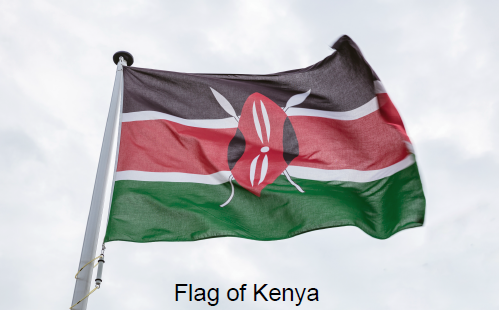
There are some places around the world that call us back. To me, Kenya is one of those places. It is a destination where the boundaries between learning and lived experience blur. Cultural connections are inseparable from the rhythms of nature. in Kenya, every encounter with wildlife, landscapes, and community becomes part of an unfolding story of change.
These types of trips where we lead students abroad encourage experiential education. Each day is a journey of new encounters and experiences. I look forward to learning about local conservation and preservation efforts and how they have made headways since I last visited. Land stewardship and community approaches to sustainability are what capture my interests and these are details I will direct my attention to as we move from attraction to attraction around Kenya.
More than 10 years have passed since I first traveled to Kenya, yet the memories remain vibrant. I recall unforgettable sunrises across the savanna and walking among wildlife. I look forward to meeting new local tour guides who will narrate the natural and cultural settings in each attraction. The intricate storytelling from the guides help us understand the land. Traditions come to life through generations of stewardship and the deep respect I felt for communities who balance local livelihood and conservation in profoundly complex ways.
I was earlier in my career as an academic researcher when I first visited Kenya. Now, I am preparing to lead a group of students. As I prepare to visit Kenya again, it feels both familiar and entirely new. For the students who will join us in June 2026, Kenya will be an adventure of firsts. First safaris, first conversations with conservationists and park rangers, first entry into communities whose cultural frameworks differ from their own.
I discuss here some research reflections, pedagogical guiding styles, and the anticipation of what it means to revisit a place that continues to shape my thinking about tourism, sustain-ability, nature, culture, and community development.
Looking Back
My initial journey to Kenya more than a decade ago introduced me to the profound interconnectedness of environment, community, and culture. At that time, I was primarily focused on experiencing the iconic elements of Kenya. I visited Masai Mara’s sweeping plains, the geologically active Great Rift Valley, experienced the bustling energy of Nairobi, and the beauty of Lake Naivasha. The chance to witness wildlife and learn in these cultural settings felt both humbling and transformative. What I came to understand over time was how these landscapes were entrenched in intricate systems of governance, cultural preservation, and resource negotiation.
As a qualitative researcher, travel encounters mean reflection. Reflection is both a method and a mindset. Revisiting my experiences through an interpretive lens reveals not just what I saw, but how I saw it. Being reflective of my travel journeys involves filtering my assumptions, my cultural background, and my developing understanding of sustainability and responsible tourism. Community-based tourism models in many remote areas are central frameworks in Kenya. Conversations about conservation tended to emphasize anti-poaching efforts, wildlife population recovery, and the role of tourism in supporting protected areas. While these issues remain vital today, Kenya’s approach has evolved significantly in ways that reflect broader shifts in global sustainability thinking.
Now, returning with the responsibility of guiding students, I am aware that my past experiences serve as both an anchor and a point of contrast. I seek this next opportunity to explore how the country’s conservation and cultural landscape have transformed. Reflecting and teaching from the standpoint of qualitative inquiry enables me to help students explore and witness their surroundings and encounters with depth and sensitivity. I add here some considerations as I prepare to embark on a journey to explore conservation, preservation, and destination sustainability with students who want to learn and experience tourism and park management firsthand in Kenya.
Kenya Today: Evolving Conservation and Cultural Preservation
 Over the past decade, Kenya has undergone significant shifts in how it approaches conservation, community development, and cultural heritage. These changes form the backbone of the field study program. Again, the aim is not simply travel and exposure, students are intentionally situated within these evolving landscapes that Kenya has to offer, and conservation and preservation are the foundation for thinking and reflecting.
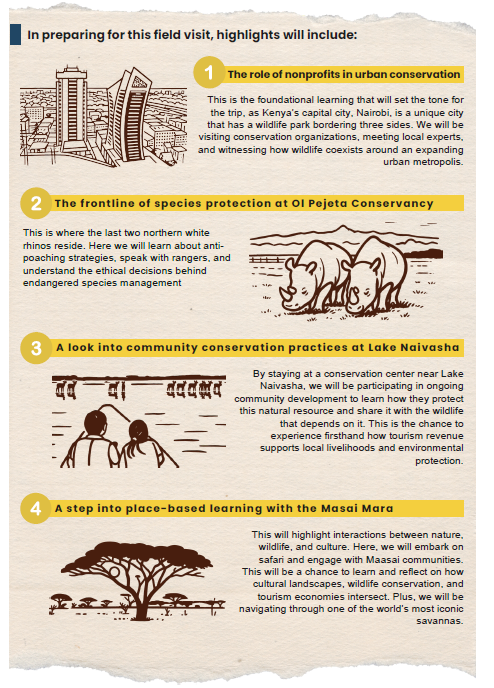
Community-based conservation efforts have continued to expand across Kenya, with a dedicated national parks system. When I first visited Kenya, conservancies were gaining traction; now, they are integral to the country’s conservation strategy. Places like Ol Pejeta Conservancy have become global leaders in community-centered wildlife management. Communities now participate in decision-making, benefit from revenue-sharing models, and serve as wildlife rangers and stewards. Conservationists continue to use new technologies. The use of drones to monitor or track migratory herds in real-time add new layers to protection. Strides to strengthen anti-poaching efforts see these individuals trained in tourism. Partnerships with NGOs and local governments have enhanced education, healthcare access, and employment opportunities. Surrounding communities see tourism as an exercise in longevity, and protecting animals from poaching enables generations to thrive and sustain off of Kenya’s valuable natural resources.
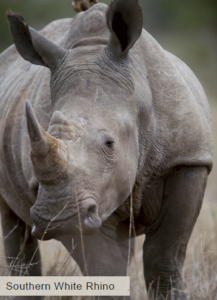
The protection of endangered species in this regard is a collaborative effort among communities and visitors. The story of the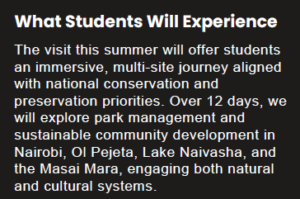 northern white rhinos at Ol Pejeta has evolved into a symbol of scientific hope and global cooperation. Assisted reproductive technologies, genetic preservation initiatives, and intensive round-the-clock protection are the foundation of Kenya’s commitment to species survival. Students will witness this effort firsthand, observing the critical balance between human intervention and ecological fragility.
Elephant orphanage programs have also expanded, emphasizing long-term rehabilitation, community education around human–elephant conflict. Elephant fostering models are in place to support conservation financing. Students will visit their fostered elephant, giving them a direct emotional and educational connection to this conservation work.
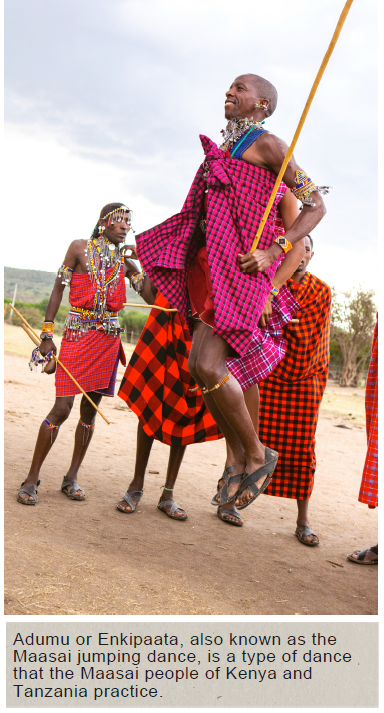
This trip is also about park management and sustainable tourism development. Cultural preservation is increasingly community-led, and Kenya has strengthened efforts to sustain indigenous knowledge systems. This is what we will experience when we visit the Maasai and rural pastoralist groups. Community-designed cultural tourism experiences now emphasize autonomy and representation. This is a shift away from earlier models where cultural performances were curated for tourists without community control. Visits to Maasai villages include dialogue about land rights, cultural change, and the coexistence of traditional livelihoods. These exist to ensure that conservation is the foundation for a sustainable tourism economy. This allows students to see cultural preservation not as static heritage, but as a living, adaptive practice.
The key point of communication is tourism is framed as a tool for sustainable futures in Kenya. The development of Kenya’s tourism industry has evolved to address cooperative involvement and community resilience. Expanded conservancies, locally-owned tourism enterprises, and collaborative governance models underscore a commitment to balancing visitor experience with long-term ecological and cultural wellbeing.
Kenya Calls Again
When I think about returning to Kenya with students, it is responding to a call that is both personal and professional. On one level, Kenya is calling me back because of the memories I experienced, learning from communities, and its natural beauty. The wildlife, landscapes, sunrises and sunsets linger, but on a deeper level, Kenya calls for new reflections.
A lot has changed in a decade, and it is important to confront the complexities of conservation as the world changes, people are increasingly mobile, and information spreads faster than we can keep up. It is important to stress being and becoming a sustainable visitor and listen to communities whose stories challenge our assumptions. Sustainability is not about checking boxes, but as a lived practice shaped by people, wildlife, and landscapes in constant negotiation.
For students, Kenya promises a learning experience that extends far beyond the itinerary. It will change how they see park management, community cohesion, and tourism development. Field studies like this are a chance to understand culture and realize responsibilities that come with balancing local land stewardship and visitor management in places undergoing dynamic transformation. For me, this is an opportunity to reconnect. My visit to Kenya was one that shaped my early academic thinking, and I continue to reflect on those past experiences there in my teaching. With the next generation of students, the intention is to carry forward these reflective understandings of place, culture, and community. So, Kenya’s calling (again)…and this time, returning is continued learning.